Vending Machines
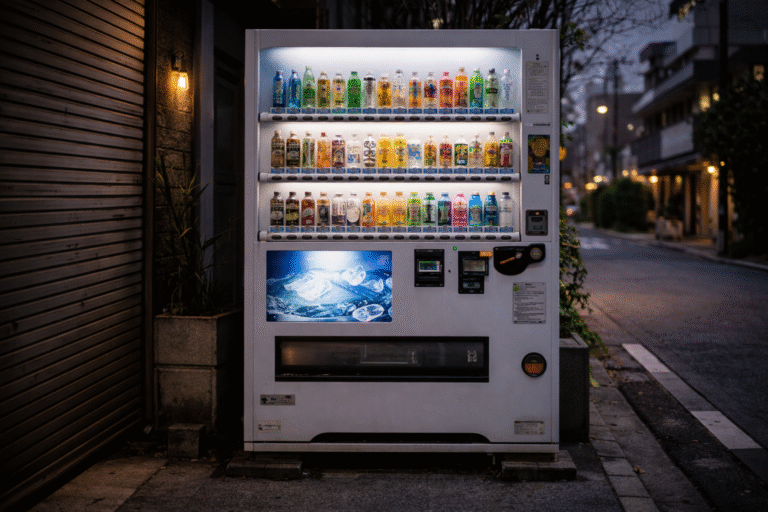
They never close, and they sell a surprising number of different things.
First time here? See how to enjoy graded reading.
Normal speed
Listen at the regular reading speed.
90% speed
Listen at a slightly slower speed.
A vending machine is a machine that sells things. You put money in the machine. Then you push a button. The machine gives you something. It can give you food, drinks, or other things.
Vending machines are very easy to use. You don’t need to talk to a person. The machine is always open. You can buy things any time — morning, afternoon, or night.
Vending Machines in Japan
Japan has more vending machines than any other country. There is about one vending machine for every 23 people in Japan!
Japanese vending machines sell many different things. They sell hot coffee, cold tea, juice, and water. Some machines sell ice cream. Some sell hot soup. Some even sell umbrellas when it rains!
Why does Japan have so many vending machines? Japan is very safe. People don’t break the machines. Also, a vending machine doesn’t need much space. This is important because land is expensive in Japan.
Many Japanese vending machines are very smart. Some machines can talk to you. Some have screens. In summer, they show cold drinks. In winter, they show hot drinks.
Vending Machines in Other Countries
The United States also has many vending machines. Most American machines sell snacks and drinks. You can find them in schools, offices, and airports. They sell chips, candy, chocolate, and soda.
In France, some machines sell bread and pizza! In Italy, some machines sell milk from farms. In the Netherlands, some machines sell flowers.
In China, vending machines are becoming very popular. Many new machines let you pay with your phone. You don’t need coins or paper money.
Why Do People Like Vending Machines?
People like vending machines for many reasons. They are fast. You can buy something in less than one minute. They are always open. You can use them at any time. They are easy. You don’t need to talk to anyone. They are everywhere. You can find them in train stations, schools, hospitals, and on streets.
Problems with Vending Machines
Vending machines also have some problems. Sometimes machines break. You put money in, but the machine doesn’t give you anything. This makes people angry. Some machines sell unhealthy food. If people eat too much candy and drink too much soda, they can become sick. Vending machines also use electricity all day and night. This uses a lot of energy.
The Future
What will vending machines be like in the future? Imagine a vending machine that knows you when you walk up to it. It might suggest a drink or snack. In the future, machines may know what you want before you press a button. They could make food you like inside the machine. Vending machines may become smarter, faster, and more convenient than ever.
Vending machines are part of modern life in many countries. They make life a little easier and faster. Next time you see a vending machine, think about how it works!
Take a moment to think about what you read.
Optional: Check your understanding
You can answer these six quick questions, or skip them and choose another story.
1. What is one reason vending machines are popular?
- They are cheaper than stores
- They are always open
- They sell only healthy food
- They work without electricity
2. Why does Japan have so many vending machines?
- People prefer machines to stores
- Japan has very cold weather
- Machines do not need much space and the country is safe
- The government requires them
3. What is something that vending machines sell in Japan that may surprise people?
- Fresh fish
- Books
- Umbrellas
- Furniture
4. In which country can you buy flowers from vending machines?
- Italy
- China
- France
- The Netherlands
5. What is one problem with vending machines mentioned in the text?
- They are hard to use
- They close at night
- They sometimes break and keep the money
- They sell only drinks
6. What is one idea about vending machines in the future?
- They will stop using electricity
- They will replace all stores
- They will only sell drinks
- They may suggest items based on the customer
Show answers
- B — They are always open
- C — Machines do not need much space and the country is safe
- C — Umbrellas
- D — The Netherlands
- C — They sometimes break and keep the money
- D — They may suggest items based on the customer
← Back to Core 800 Reading
← Back to Graded Readers
← Back to Home