Professional Graded Reading Level 1
Behind the Scenes at a Hotel
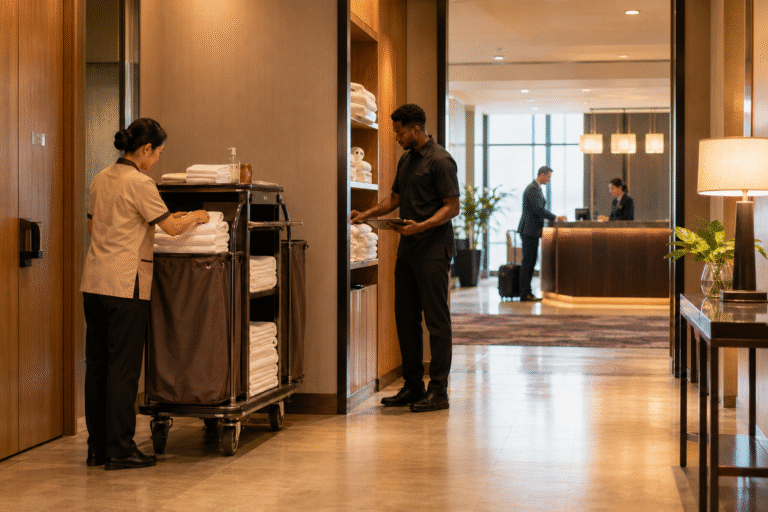
Discover how hotel staff coordinate rooms, food, safety, and guest services to create a smooth stay.
A hotel can appear calm and effortless. Guests enter a clean lobby, receive a room key, and expect every service to be ready. Behind this simple experience, however, is a large professional operation. Reception staff, housekeepers, cooks, maintenance workers, and managers must coordinate their work throughout the day.
Most guests see only a small part of this activity. They may speak with a receptionist, order a meal, or request an extra towel. Each request starts a process involving several employees and departments. Good service depends on clear communication, careful planning, and attention to detail.
Before the Guests Arrive
The work begins before a guest enters the building. When someone makes a reservation, the hotel records the arrival date, room type, payment information, and any special requests. The reservation system helps managers estimate how many rooms will be occupied and how many employees will be needed.
Each morning, the front office prepares a list of expected arrivals and departures. Staff check whether any guests need an early room, a late departure, or special assistance. A family may request an additional bed, while a business traveler may need a quiet room and reliable internet access.
Managers also review the room rate for the day. Prices may change according to demand, local events, or the season. If a large conference is being held nearby, the hotel may reach full capacity. Accurate information allows the sales and reception teams to make suitable decisions.
Preparing Every Room
Housekeeping is one of the hotel’s largest operations. After a guest leaves, a housekeeper enters the room with a supply cart. Used sheets and towels are removed, surfaces are cleaned, and bathroom supplies are replaced. The worker also checks the furniture, lights, television, and other equipment.
Speed matters, but quality is equally important. A room may look ready while still containing a problem. A missing towel, a damaged lamp, or an unpleasant smell can lead to a complaint. Many hotels therefore use a detailed checklist, and a supervisor may inspect the room before its status is changed to available.
Housekeepers report maintenance problems through a digital system or directly to a supervisor. If a lock does not work or water is leaking, the room may be removed from service until a technician completes the repair. This prevents the reception team from assigning a room that is not ready.
Managing Food and Supplies
A hotel restaurant begins preparing long before the first customer arrives. Kitchen staff check reservations, plan production, and examine their inventory. They must have enough food for normal service without purchasing so much that fresh products are wasted.
Deliveries usually enter through a service area away from the main entrance. Employees confirm each invoice and inspect the goods before accepting them. Food must be stored at the correct temperature, while cleaning products must be kept in a separate secure place.
The same care applies to towels, soap, coffee, office materials, and hundreds of other items. Purchasing staff compare prices and quality from different suppliers. A late delivery can affect several departments, so managers often maintain a limited reserve of essential products.
Serving Guests Throughout the Day
The reception desk connects guests with the rest of the hotel. A receptionist may answer questions, process payments, arrange transportation, or respond to a complaint. The employee must listen carefully, confirm the details, and send the request to the correct department.
Communication is especially important during busy periods. If a guest asks for a repair, the receptionist records the room number and explains the problem to maintenance. The technician reports when the job is complete, allowing reception to update the guest. Without this final message, the work may be finished but the guest may still feel forgotten.
Employees also protect private information. Room numbers, payment records, and personal details must be handled according to hotel policy. Staff should never announce a guest’s room number loudly or provide information to an unknown caller.
Safety, Security, and Maintenance
Many hotel systems operate continuously. Engineers inspect heating, cooling, water, elevators, and electrical equipment. Regular maintenance reduces the risk of a serious failure and can lower energy costs. Security staff monitor public areas and respond when assistance is required.
Every employee needs to understand emergency procedures. Hotels conduct training for fires, medical incidents, and other unexpected events. Clear responsibilities help staff act quickly while keeping guests calm. Records of inspections and training may also be required by local regulations.
Learning from the Guest Experience
After departure, guests may receive a request for feedback. Managers study comments, ratings, and complaints to identify repeated problems. One negative review may describe an individual experience, but several similar reviews can reveal a weakness in the hotel’s operation.
Successful hotels use this information to improve. They may change a procedure, purchase better equipment, or provide additional training. Managers also recognize employees who receive positive comments because good service depends on people as much as systems.
The next time you stay at a hotel, notice how many services appear at exactly the right moment. A clean room, a prepared breakfast, and a quick response are not accidents. They are the visible results of planning, teamwork, and hundreds of professional tasks taking place behind the scenes.
Take a moment to think about what you read.