The Dancing Plague of 1518
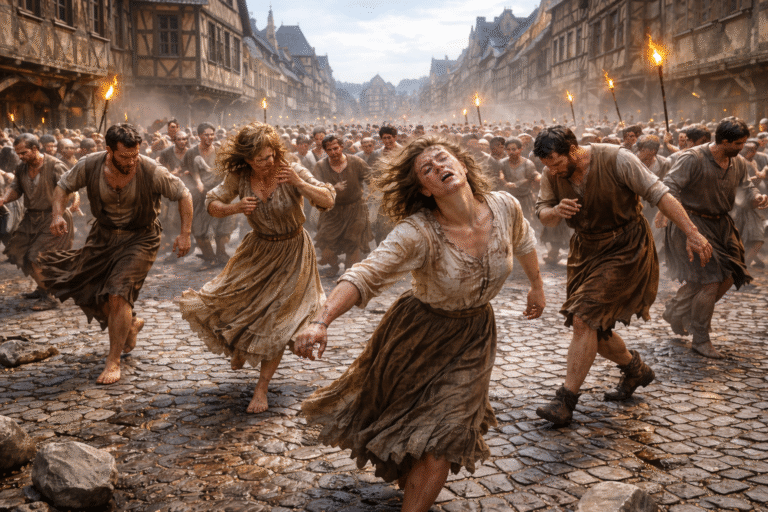
A city trapped in endless motion
The air vibrated with an unsettling rhythm—the relentless pounding of footsteps echoing against the cobblestones. In July of 1518, the scorching summer sun hung high over Strasbourg as people went about their daily routines in the streets and markets. But then, something unusual gripped their attention. Frau Troffea stepped into the road and, with a sudden intensity, began dancing.
At first, people thought it was funny. They stopped to watch her. She danced and danced. Her feet moved quickly across the stones, the scrape of leather echoing between the buildings. The mingled scent of sweat and market spices hung heavy in the hot summer air. She turned and jumped. People laughed, and some even cheered. But Frau Troffea did not stop dancing. She danced for hours.
The sun went down, and night came. Still, she danced. Her face showed that she was tired, but her body would not stop moving. People became worried. They tried to talk to her, but she could not answer. She just kept dancing.
The next morning, she was still dancing. Her feet were red and sore. She looked sick and weak, but she could not stop. By the third day, more people joined her. First, it was just a few, then more and more. Soon, thirty people were dancing in the streets. They could not control their bodies.
Within a week, more than one hundred people were dancing. The city leaders did not know what to do. Doctors came to look at the dancers, but they had no answers. Some people said it was caused by hot blood. Others thought evil spirits were making people dance. Some believed God was angry with the city.
The dancers could not eat or drink. They could not sleep. Their feet bled. Some fell down but stood up again and continued to dance. The dancing went on day and night. The sound of feet hitting the ground filled the streets.
The city leaders made a decision. They thought that the dancers needed to dance more until the sickness left their bodies. They built wooden stages in public places. They paid musicians to play music. They even paid people to dance with the sick dancers. But this made everything worse. More people started dancing. Soon, there were over four hundred dancers.
People began to die. Some died because their hearts stopped from being so tired. Others died because they could not eat or drink. The bodies of dancers lay in the streets. The people of Strasbourg were afraid. No one knew when it would end.
Finally, the city leaders changed their plan. They stopped the music. They took the dancers out of the city to a place in the mountains with a small church. Priests prayed for the dancers. They put the dancers’ feet in holy water. They gave them religious objects to hold.
Slowly, the dancing stopped. First one person stopped, then another. By September, the plague was over. The streets were quiet again. But the people of Strasbourg would never forget that terrible summer when hundreds of people danced until they could not dance anymore.
Even today, no one knows for sure why the dancing plague happened. Some modern scientists think people ate bread made from grain that had something bad growing on it. This could make people see things that were not real and lose control of their bodies. Others think it was caused by stress and fear, and that when one person started dancing, others felt they had to dance too.
The dancing plague of 1518 remains one of history’s strangest mysteries.
Take a moment to think about what you read.
Check your understanding
Where did the Dancing Plague of 1518 take place?
A. Rome
B. Strasbourg
C. Paris
D. ViennaWho was the first known person to start dancing in the streets?
A. A visiting priest
B. A market musician
C. Frau Troffea
D. A city doctorHow long did Frau Troffea continue dancing at the beginning of the event?
A. For only one full week
B. For a few minutes
C. For one evening
D. For several hours and into the next dayWhat action did the city leaders first take to respond to the dancing?
A. They built stages and hired musicians to encourage dancing
B. They arrested the dancers
C. They stopped all music in Strasbourg
D. They sent the dancers out of the city immediatelyWhat happened after the city encouraged the dancers to keep dancing?
A. The dancers quickly recovered
B. More people joined, and the situation became worse
C. Only musicians were affected
D. The dancing slowly stoppedAccording to modern theories, what may have caused the dancing plague?
A. A foreign invasion
B. Poisoned water from the river
C. Bad grain or extreme stress and fear
D. A secret religious ritual
Show answers
- b
- c
- d
- a
- b
- c