Professional Graded Reading Level 1
The Blockage That Shook the World: The Strait of Hormuz Crisis
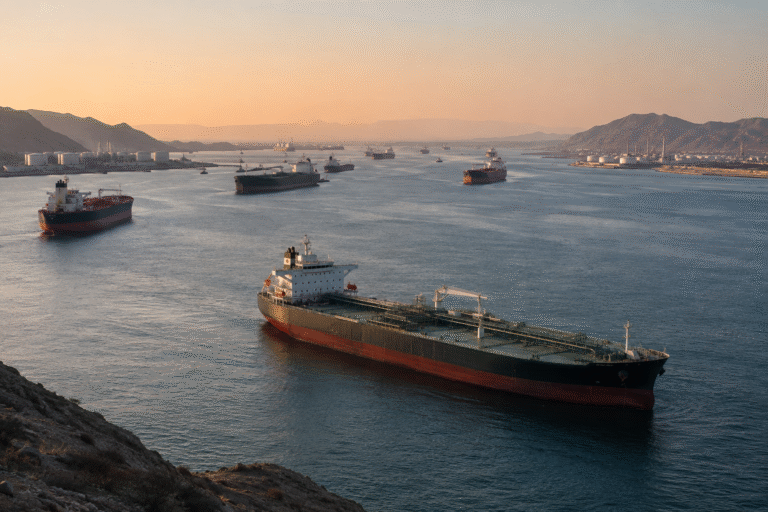
Discover how the world is dependent on products shipped from the Persian Gulf .
In early 2026, ships moving through the Strait of Hormuz faced a serious crisis. Fighting in the region made the narrow waterway dangerous. Some ships were attacked, while many others remained inside the Persian Gulf because their operators did not want to risk the lives of their crews.
The problem soon affected people thousands of kilometers away. The Strait of Hormuz is not simply a local shipping route. It is one of the most important energy routes in the world. Before the crisis, about 20 million barrels of oil passed through it each day. Large amounts of natural gas and fertilizer also used the route.
When traffic through the strait nearly stopped, the effects quickly spread through the global economy.
A Narrow but Important Route
The Strait of Hormuz connects the Persian Gulf with the Gulf of Oman and the Arabian Sea. At its narrowest point, it is only about 54 kilometers wide. Ships entering and leaving the Gulf must follow even narrower shipping channels.
Several major oil and gas producers depend on this route. These include Saudi Arabia, Iran, Iraq, Kuwait, Qatar, Bahrain, and the United Arab Emirates. Some countries have pipelines that can carry part of their oil to other ports. However, these pipelines do not have enough capacity to replace all the ships that normally use the strait.
As the danger increased, tanker traffic fell sharply. Oil continued to be produced in some areas, but companies could not transport all of it to their customers. Storage facilities began to fill, forcing some producers to reduce production.
The First Effect: Higher Energy Prices
Oil and gas prices reacted immediately. Buyers were uncertain about how much energy would be available and how long the disruption would continue. This uncertainty increased demand for supplies from other regions.
Countries began using more oil from their inventories. Producers outside the Gulf also tried to increase production. However, replacing such a large supply was difficult.
Higher oil prices affected gasoline, diesel, and jet fuel. Drivers paid more to fill their vehicles, while airlines faced higher operating costs. Delivery companies, bus operators, farmers, and factories also needed to spend more on fuel.
Natural gas supplies were affected as well. Qatar is an important exporter of liquefied natural gas, or LNG. Much of this gas normally passes through Hormuz. Reduced shipments created pressure on electricity and heating costs in countries that depend on imported gas.
From Fuel to Transportation
The crisis also changed the cost of moving goods. Shipping companies had to consider whether entering the region was safe. Insurance companies increased their charges because ships, cargo, and crews faced greater risks.
Fuel for ships became more expensive at the same time. As a result, carriers charged more to transport merchandise. These additional expenses became part of the final price paid by businesses and consumers.
Air transportation was affected too. Airlines not only paid more for fuel but also changed some routes to avoid dangerous airspace. Longer routes required additional fuel and sometimes reduced the number of passengers or the amount of cargo that an aircraft could carry.
Problems for Factories and Stores
Many companies depend on regular deliveries. A factory may require fuel, chemicals, packaging, and hundreds of individual parts. If one essential shipment is delayed, production may slow or stop.
Managers responded by searching for alternative suppliers and transport routes. These alternatives were often more expensive. Some businesses increased their inventories to protect themselves against future delays. However, purchasing and storing additional supplies required more money and space.
Retailers also faced difficult decisions. They could accept lower profits, increase their prices, or reduce the amount of merchandise they offered. Each decision carried a risk. Higher prices might reduce demand, but keeping prices unchanged could create a financial loss.
The Effect on Food
One of the less obvious effects involved agriculture. The Gulf region exports materials used to make fertilizer. When these shipments were reduced, fertilizer became more expensive in many markets.
Farmers also paid more for fuel to operate equipment and transport their products. These higher costs did not appear in stores immediately. Crops require time to grow, and food passes through several stages before reaching consumers.
Months after the original disruption, families could therefore pay more for bread, vegetables, and other basic goods. Countries that import both energy and food faced especially serious pressure.
Unequal Consequences
Wealthy countries could use emergency inventories or provide financial support to businesses and households. Poorer countries had fewer choices. Some already had large debts and limited supplies of foreign currency.
When the price of imported oil increased, these countries had to spend more money simply to maintain essential services. Governments then had less money for education, health care, and other public programs.
The crisis also weakened some national currencies. This made imported goods even more expensive and increased the pressure on ordinary consumers.
A Long Chain of Effects
The Strait of Hormuz crisis demonstrated how one narrow passage can influence the entire world. A tanker that cannot leave the Persian Gulf may seem far removed from a supermarket, an airline ticket, or a factory worker. In reality, they are connected through a complex network of production, transportation, trade, and finance.
Even when shipping returns to normal, the effects do not disappear immediately. Inventories must be rebuilt, delayed orders must be completed, and damaged business relationships must be repaired. Energy prices may fall quickly, but higher food costs and financial problems can continue much longer.
The blockage showed that global trade depends on a small number of important routes. When one of them becomes unsafe, the shock can travel around the world.
Take a moment to think about what you read.