The Titanic
The Iceberg was not the Only Story.
Fire down below
Most people think of the iceberg when they hear about the Titanic. On a cold night in April 1912, the ship hit ice in the North Atlantic and slowly sank. This story is known worldwide and has been shared in books, movies, and classrooms for over a century.
However, the iceberg was not the only reason the Titanic sank. Long before the ship hit the ice, another danger was already present. It was quiet, hidden, and most passengers did not know about it. This danger was a fire.
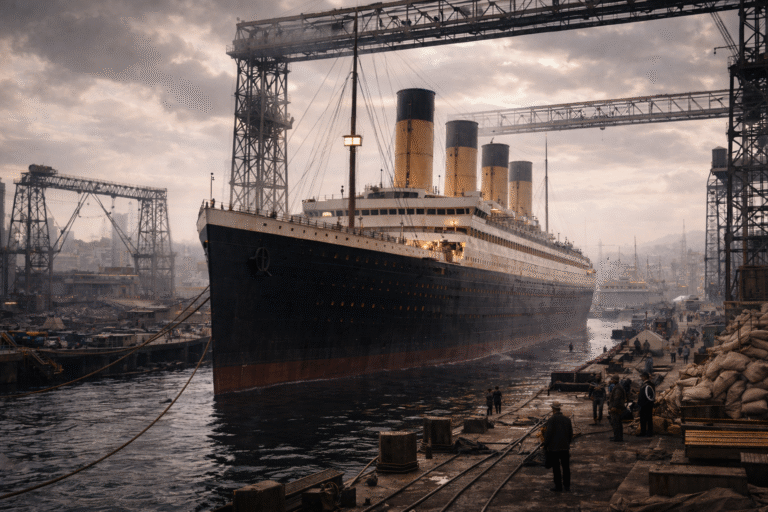
The Titanic was built in Belfast at one of the world’s largest shipyards. It was meant to be strong, modern, and safe. Many people thought it could not sink. The ship had special walls inside called bulkheads, which were supposed to stop water from spreading if the ship was damaged. These bulkheads were an important part of its safety design.
But while the Titanic was still in Belfast, a fire started deep inside the ship. It started in one of the coal bunkers. These were large storage rooms where coal was kept for the ship’s engines. At that time, coal fires were not rare on ships. Coal can heat up and catch fire if it is packed tightly and not moved often. Most of these fires were small and easy to control.
But this fire was different. Later reports say the coal bunker fire burned for several weeks. Deep within the ship, stokers worked tirelessly under extreme conditions, shoveling blazing coal as blistering heat enveloped the bunkers. The acrid smoke clung to their clothes, and the intense heat felt like a relentless wave against their skin. Workers tried to control it by moving the coal and using it quickly in the engines. From the outside, the ship looked normal. Passengers boarding the Titanic for its first trip did not know there had been a serious fire on board.
Inside the ship, though, the fire was causing damage.
The coal bunker fire created intense heat. This heat pressed against the ship’s steel walls for many days. Modern studies show that steel exposed to high heat for a long time can become weaker and less able to handle stress.
Photos taken before the ship sailed show a dark mark along part of the hull. Some experts think this mark may have been caused by heat from the fire inside.
The bulkheads near the fire were especially affected. These structures were meant to stop water in an emergency. If they were even a little weaker, the ship’s chances of surviving damage would be lower.
No one could see this weakness from the outside. The Titanic still looked strong, clean, and ready for its trip.
When the Titanic hit the iceberg in the North Atlantic, the damage seemed small at first. The ship did not hit the ice straight on. Instead, the iceberg scraped along the side of the hull, opening several sections at once.
This was a problem, but it might not have been deadly if the bulkheads had held.
As water came into the ship, it moved from one compartment to another. The bulkheads were supposed to stop the flooding. But under the pressure of cold water and the stress from the damage, they started to fail.
Some researchers think the earlier fire was important here. The heat may have weakened the steel just enough to make the difference between survival and disaster.
Why Was the Ship Allowed to Sail? Historians have wondered about this for years. Why would a ship with a serious fire be allowed to start its trip?
At the time, there was a lot of pressure to keep to the schedule. The Titanic was part of a competitive business. Delaying its first trip would have cost money and hurt confidence. Coal fires were also seen as problems that could be managed rather than major dangers.
The crew thought they had the fire under control. By the time the ship left Belfast and stopped in Southampton, the fire was mostly hidden. To everyone else, the Titanic seemed ready.
The sinking of the Titanic did not happen because of just one mistake or event. Many things came together: speed, ice warnings, design limits, and human choices. The iceberg was the final cause, but the fire may have set the stage much earlier.
This makes the Titanic story even more powerful. It shows that big disasters often start quietly. Small problems, if ignored or misunderstood, can grow into something unstoppable.
More than a hundred years later, the Titanic still teaches us lessons—not just as a ship lost at sea, but as a warning about risk, pride, and hidden danger. The iceberg ended the journey, but the fire may have helped decide the ship’s fate long before that cold April night.
Take a moment to think about what you read.
Check your understanding
1. What event is most commonly blamed for the sinking of the Titanic?
A. A fire in the engine room
B. A storm in the Atlantic Ocean
C. An iceberg
D. A collision with another ship
2. Where did the hidden fire start?
A. In the passenger cabins
B. In the coal bunkers
C. In the boiler room
D. On the ship’s deck
3. Why were coal fires not considered unusual on ships at that time?
A. Ships were designed to burn coal
B. Coal fires were usually small and manageable
C. Fire alarms were unreliable
D. Crews were trained firefighters
4. How did the fire affect the ship’s structure?
A. It melted holes in the hull
B. It weakened the steel over time
C. It damaged the lifeboats
D. It destroyed the engines
5. What happened when the Titanic struck the iceberg?
A. The ship split in half
B. Only one compartment filled with water
C. Several compartments were damaged at once
D. The engines stopped immediately
6. According to the reading, why was the ship allowed to sail despite the fire?
A. The fire was completely extinguished
B. The damage was visible and repaired
C. There was pressure to keep the schedule
D. Passengers demanded the trip continue
Show answers
Answers:
1. C
2. B
3. B
4. B
5. C
6. C